
Record MCAS reactions and daily context.
The Good Tracker is a free MCAS tracker for recording symptoms and daily context. Log how you feel alongside sleep, food, medication, and notes, then review your entries over time. Use the record to prepare questions for appointments. Patterns in your logs do not establish causes or provide medical advice.
For a daily overview, use the chronic illness symptom tracker. Related logging approaches: mast cell food diary, chronic illness food diary, food and symptom tracker.
Free account required · about 45 seconds · your logs sync to your account
Feel more in control of what changed.
The Good Tracker is built for the messy middle: when symptoms, food, medicine, sleep, stress, and life all overlap, and you need one place to make sense of it.
Log what happened without building a spreadsheet.
Use simple 0 to 10 scales for things like Reactions, Food triggers, Environmental, Fatigue, then add the context that matters: voice notes, food photos, medication timing, sleep, and daily notes.
Say how you feel. Keep symptoms, food and meds together in your daily log.
Keep symptoms, food, meds, and timing together.
Most trackers split your life into separate boxes. The Good Tracker keeps the pieces connected, so you can see the day as a whole instead of trying to remember what happened later.

See trends and ask what changed.
Over time, the app turns your logs into a clearer timeline. You can look at charts, compare changes, and ask plain-English questions about whether something seemed different.
Built for
Track
What it helps reveal
A clearer record when you need to explain the week.
MCAS reactions can be serious. The Good Tracker is for pattern tracking, not emergency care or diagnosis. Keep daily logs, food photos, medicine timing, and symptom scores together so your history is easier to revisit.
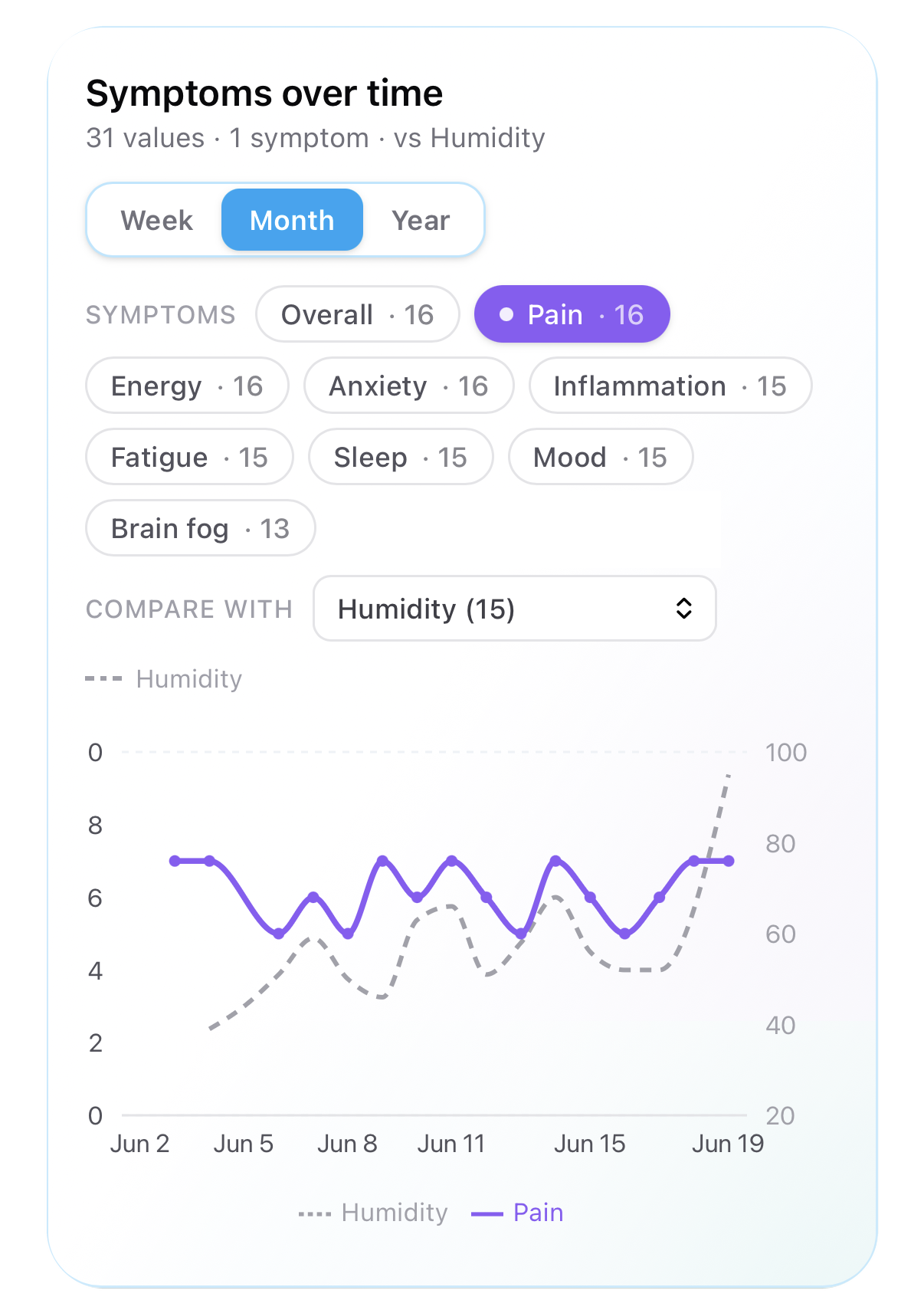
See a symptom next to the day around it.
This chart shows pain alongside humidity. It is an example of a pattern in a log, not a cause, a diagnosis, or a story from a specific person.
Simple, careful, and personal.
Guides to help you track
Short, practical guides for getting the most out of your daily log.
Three months of logs builds a record worth having.
A week of data shows what happened. A month shows patterns. Three to six months builds the kind of record that helps you see what is actually shifting, and gives you or your care team something concrete to act on. Biology gives us some useful windows for why that timeframe matters.
That's what tracking is for. Not to count calories or hit goals. To build a record that tells the story of what changed, and when.
Start logging freeMCAS is one of the most poorly understood conditions, and careful tracking is one of the most powerful tools you have.
MCAS can feel like your body is reacting to everything and nothing at the same time. The path forward is almost always built on data: careful tracking of what you ate, where you went, what you took, and how your body responded. Over time, patterns emerge. Triggers become clearer. And as they become clearer, you get more room to navigate. It is painstaking work. But people with MCAS who track carefully often find they can reduce reaction frequency and severity more than they thought possible. That is the work we want to support.
Start with one small check-in.
Open the app, log today, and let the pattern build from there.